
Solar Screen Heat Reduction Example for Houston Homes
At 4:30 p.m. in a Houston summer, the difference between a west-facing room with bare windows and one protected by solar screens can be felt before the thermostat changes. This solar screen heat reduction example shows why homeowners often choose exterior solar screens when sunlight makes a living room, bedroom, or home office hard to enjoy.
Solar screens are designed to stop a meaningful portion of the sun's heat and glare before it reaches the glass. That matters in the Houston and Porter area, where long cooling seasons, strong afternoon sun, and large windows can put real pressure on comfort and air-conditioning costs.
A Solar Screen Heat Reduction Example in a Real Room
Picture a family room with two large west-facing windows. Each window is roughly 36 by 60 inches, for a combined glass area of 30 square feet. From midafternoon through sunset, the room receives direct sun. Without exterior shading, that glass can become a source of intense radiant heat, bright glare on the television, and fading risk for flooring and furnishings.
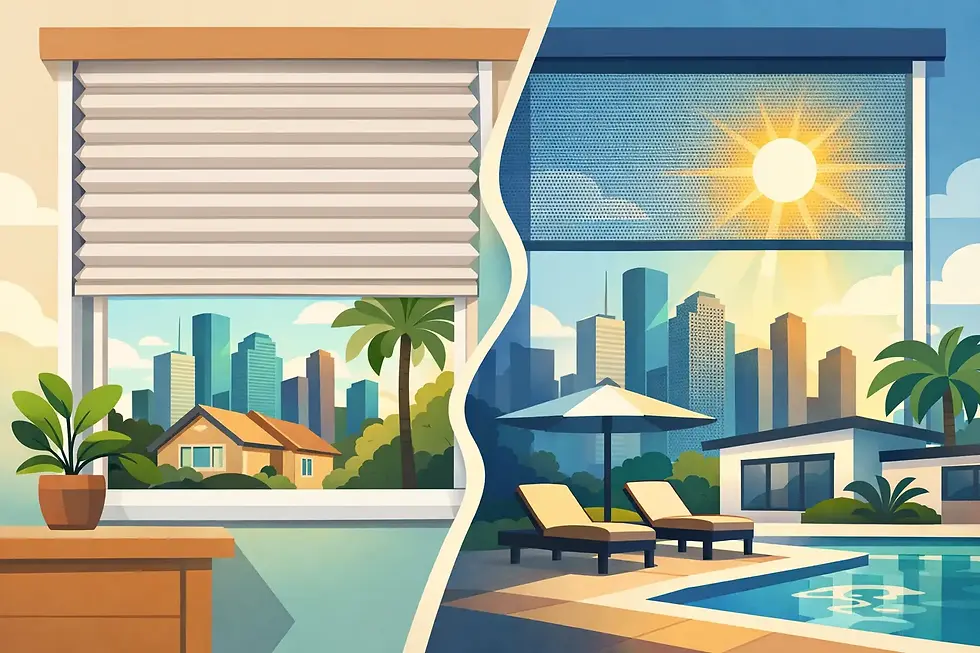
Now add custom solar screens with a 90% openness factor. Despite the name, a 90% solar screen does not mean 90% of the view is blocked. It generally refers to the material's ability to shade the opening, leaving a tighter weave that provides stronger sun control than a more open fabric. The screen still allows outward visibility and filtered daylight, but it intercepts much of the solar energy before it strikes the window.
In practical terms, homeowners may notice that the room no longer feels like the hottest spot in the house during the late afternoon. The air conditioner does not have to fight as much heat pouring through the glass, the sofa near the window becomes more usable, and the television screen is easier to see. The exact temperature difference varies by home, window type, orientation, insulation, and HVAC performance, but the comfort improvement can be immediate.
A solar screen is not a replacement for high-performance windows or a properly sized air-conditioning system. It is a targeted way to reduce one of the most persistent sources of unwanted heat: direct sunlight at the glass.
Why Exterior Screens Can Make Such a Noticeable Difference
Once sunlight passes through a window, much of its energy is trapped inside as heat. Interior blinds and shades still help with privacy, glare, and light control, but exterior solar screens address the sun earlier in the process. They create a protective layer outside the glass, where the heat has less opportunity to enter the room.
That placement is especially valuable on west- and south-facing windows. West-facing openings are often the biggest complaint because the sun is lower in the afternoon, brighter in the eyes, and still heating the home when families are returning from work or school. South-facing windows can receive substantial sun for longer portions of the day. East-facing windows may benefit too, particularly in bedrooms or kitchens that become uncomfortably bright each morning.
For homeowners comparing products, it helps to separate heat control from darkness. A solar screen can reduce glare and solar heat gain while maintaining a view outside. If complete room darkening is the goal, a blackout shade or lined drapery may be the better interior solution. Many homes benefit from both: solar screens outside for heat reduction, paired with custom interior treatments for privacy, style, and nighttime light control.
What Changes the Results From Home to Home
A simple example is useful, but real-world performance depends on the details. The direction each window faces is one of the most important factors. A shaded north-facing window may need little help, while a large west-facing wall of glass can benefit dramatically from solar screening.
The screen's openness level also matters. A more open screen, such as 80%, generally preserves a brighter view and more daylight. A tighter 90% screen offers stronger shade, glare control, and daytime privacy, but it can make the window appear darker from inside. Neither option is automatically right. The best choice depends on how much direct sun the room receives, what you see outside, and how you want the space to feel.
Window construction affects the outcome as well. Older single-pane windows, builder-grade glass, and large unprotected patio doors often allow more unwanted heat than newer insulated windows. Solar screens can still provide value on efficient windows, particularly where direct sunlight and glare remain a problem, but the percentage of improvement may look different.
Color is another consideration. Darker screen fabrics typically provide better outward visibility because they reduce reflected light. They can also create a sharper view from inside during the day. Lighter colors may better complement the exterior of the home and can be a good design choice, though they may show more reflected light. A professional consultation helps balance curb appeal with performance instead of treating solar screens as a one-size-fits-all purchase.
Comfort Benefits Beyond the Thermostat
Heat reduction is usually the first reason homeowners call, but it is rarely the only benefit. Solar screens soften the harsh glare that makes it difficult to read, work on a laptop, or watch a movie. They also help protect hardwood floors, rugs, artwork, and upholstered furniture from the steady fading caused by UV exposure.
Daytime privacy is another advantage. During daylight hours, people outside have a harder time seeing into a screened window while you retain visibility outward. At night, when interior lights are on, that effect reverses. Solar screens should not be relied on for nighttime privacy. Pairing them with blinds, roller shades, curtains, or shutters gives the home full control at every hour.
The exterior appearance can be a benefit, too. Properly measured screens create a clean, finished look that coordinates with the home's trim, window frames, and overall style. Custom sizing is essential. A loosely fitted screen or poorly chosen frame color can undercut both the performance and the appearance.
How to Choose the Right Solar Screen Setup
Start by identifying the rooms that are hardest to keep comfortable. Think about when the problem occurs, not just which windows look sunny. A breakfast nook may need morning glare control, while a media room may need protection from late-day western exposure. This helps prioritize the windows where solar screens will deliver the clearest benefit.
Next, consider how you use the room. A scenic backyard view may call for an openness level that keeps the outdoors visible. A street-facing office or a room with relentless afternoon glare may be better suited to a tighter weave. If the window needs nighttime privacy or complete darkness, plan an interior treatment alongside the exterior screen rather than expecting one product to do every job.
Professional measuring is worth it, especially for large windows, arches, patio openings, or homes with unusual trim. The right fit affects coverage, durability, operation, and curb appeal. At A Lone Star Blinds, homeowners can get personalized guidance on fabric openness, frame colors, window priorities, and interior treatments that work together without the premium-price guesswork.
Is the Savings Worth It?
Solar screens can reduce the cooling burden created by direct sunlight, but no responsible installer should promise one exact dollar amount for every home. Utility savings depend on the size and exposure of the windows, thermostat habits, energy rates, insulation, existing glass, and how efficiently the HVAC system operates.
The stronger case is often comfort first, with energy savings as a valuable long-term benefit. If one room is consistently avoided because it is too hot or too bright, a well-chosen solar screen can make that square footage enjoyable again. In a climate where air conditioners work hard for much of the year, reducing solar heat at the window is a practical improvement that supports a more comfortable home.
If afternoon sun is taking over your favorite room, bring a few photos, note the time the heat is worst, and request a custom quote. The right screen should give you better light control, a cleaner exterior look, and a room that feels ready to use when the Texas sun is at its strongest.


Comments