Best Solar Screens for Patios in Houston
A Houston patio can look beautiful at noon and feel impossible to use by 12:15. Direct sun, reflected glare, hot decking, and insects can turn an outdoor living area into a space you avoid for much of the year. The best solar screens for patios reduce that exposure without closing off the view or making your home feel dark.
The right choice is rarely the darkest fabric or the lowest price. It is the screen that fits your patio’s orientation, your privacy needs, your architecture, and the way your family actually uses the space. For some homeowners, that means fixed exterior solar screens. For others, retractable patio shades offer the flexibility to enjoy open air when conditions are comfortable and shade when the Texas sun is at its strongest.
What Makes a Solar Screen Right for a Patio?
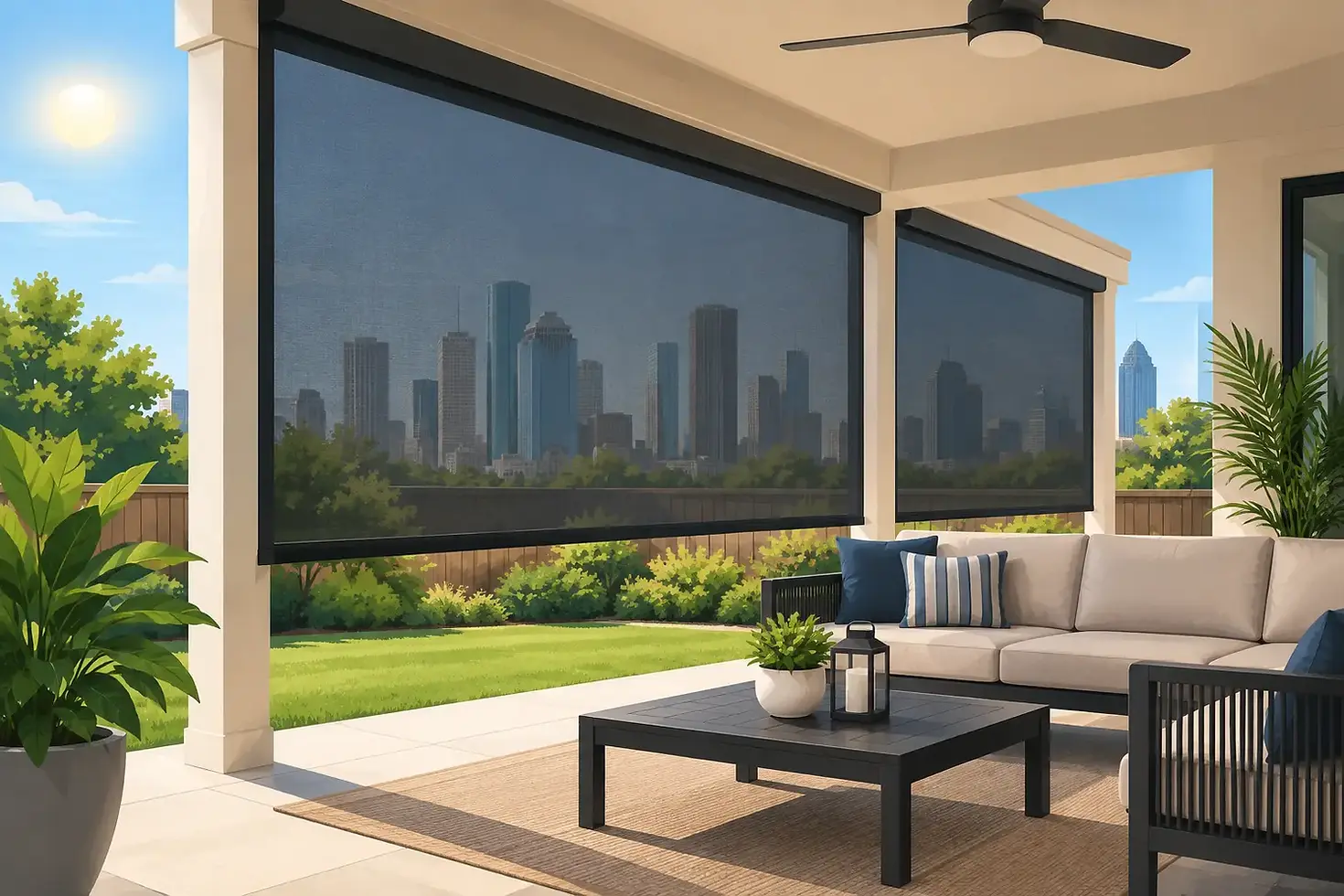
Patio solar screens are exterior mesh shades designed to stop a portion of the sun’s heat and glare before it reaches your seating area, doors, and windows. Because they work outside the glass, they can make a noticeable difference in comfort while also helping protect flooring, furnishings, and interior finishes from harsh UV exposure.
The best option balances four things: heat control, visibility, privacy, and appearance. A screen that blocks more sun may be ideal on a west-facing patio, but it may also reduce your outward view. A more open weave preserves sightlines and daylight but provides less protection during the hottest afternoon hours. There is no one fabric that is perfect for every Houston-area home.
Custom sizing also matters. Patio openings are rarely standard, especially around brick columns, rooflines, French doors, or covered outdoor kitchens. Professionally measured solar screens create a cleaner finish, operate more reliably, and prevent the light gaps that can defeat the purpose of adding shade.
The Best Solar Screens for Patios by Need
For intense afternoon heat: 1% to 3% openness
If your patio faces west or receives several hours of direct afternoon sun, a tighter weave is often the strongest choice. A 1% or 3% openness solar screen blocks a substantial amount of sunlight and reduces the sharp glare that makes outdoor seating uncomfortable.
This is a practical option for patios beside large sliding doors, media areas with outdoor televisions, or spaces with dark stone and concrete surfaces that absorb heat. The trade-off is visibility. You can still see through the material, especially during the day, but the view will be more filtered than it would be with a more open fabric.
For shade with a clearer view: 5% openness
A 5% openness fabric is often the sweet spot for covered patios and outdoor rooms. It cuts glare and heat while maintaining a more natural connection to the yard, pool, or landscaping. Many homeowners prefer this range because it gives the patio a finished look without making it feel enclosed.
It works especially well when the roof already provides overhead shade but low-angle sun still enters from one or two sides. If you want to keep an eye on children in the yard or preserve a view of your garden, this may be the better balance.
For maximum outward visibility: 7% to 10% openness
More open solar screen fabrics are best for patios that need light filtering rather than heavy sun blocking. They are useful on shaded sides of the home, under deep patio covers, or where the primary goal is reducing a little glare without losing the open-air feeling.
A higher openness percentage is not the best choice for a fully exposed west-facing patio in Texas. It will help, but it cannot provide the same level of heat control as a tighter weave. Think of it as a light, polished filter rather than a serious barrier against punishing sun.
For flexible coverage: retractable solar shades
Retractable exterior solar shades give homeowners control over when the patio is screened. Raise them for an open view and breeze, then lower them when the sun shifts, neighbors are nearby, or insects become a problem later in the evening.
This is often the premium-looking choice for covered patios, pergolas, and outdoor kitchens. Motorized options add convenience for large openings or hard-to-reach installations. They cost more than a basic fixed screen, but the day-to-day flexibility can be worth it when the patio serves multiple purposes.
Choose Screen Color for Performance and Curb Appeal
Screen color affects more than the look of your patio. Darker fabrics, such as charcoal, bronze, and black, typically provide better outward visibility because they absorb light rather than reflecting it. From inside the patio, they often make the view feel sharper and less hazy.
Lighter fabrics can coordinate beautifully with stucco, stone, or light trim, but they may reflect more light and make the view feel less defined. They can still be a good design choice when matching the home exterior is the priority.
For many Houston homes, charcoal is the dependable all-around option. It complements brick, painted siding, and modern exterior finishes while providing strong glare reduction. Bronze can feel warmer and more traditional, particularly on homes with earth-tone brick or wood details. The right color should work with your home during the day, when the screen is in use, not just from a small swatch indoors.
Fixed Screens vs. Retractable Patio Shades
Fixed solar screens are a smart fit when an opening needs constant protection. They are straightforward, clean-looking, and generally more budget-friendly. If a side of your patio gets relentless afternoon sun every day, a fixed screen can deliver consistent comfort without requiring any adjustment.
Retractable shades are better when you want choices. They allow you to open up the patio for entertaining, enjoy a clear morning view, or protect the space during the hottest part of the day. They also offer a more tailored solution for larger or irregular openings.
The decision often comes down to how permanent you want the shade to feel. A patio that doubles as an outdoor room may benefit from retractable shades. A small exposed area where comfort is the only concern may be well served by fixed custom solar screens.
Details That Separate Custom Solar Screens From a Basic Solution
Fabric performance is only one part of the project. The frame, mounting method, hardware, and installation quality determine whether your screens look intentional and hold up through Houston weather.
A custom consultation should consider the direction of the sun, the width and height of each opening, the condition of the patio structure, and potential wind exposure. Screens must be properly tensioned and secured, particularly on open patios that receive strong gusts during storms. A loose or poorly fitted screen can rattle, sag, and wear prematurely.
It is also worth discussing insects. Solar fabric can help make a patio more pleasant, but not every solar screen installation is intended to function as a fully sealed bug enclosure. If mosquito control is a primary goal, your design may need additional screening details around the sides, bottom, or door openings.
Motorization deserves a practical conversation as well. It is convenient, polished, and especially useful for wide spans. Yet manual operation can be a reliable, cost-conscious choice for smaller patios. The best system is one you will actually use often enough to enjoy the benefits.
Get a Patio Screen That Fits Your Home, Not a Generic Opening
The best solar screen should make your patio feel like usable square footage again. It should soften the heat, reduce glare, complement the exterior design, and give you the privacy you want without shutting out the backyard you enjoy.
At A Lone Star Blinds, homeowners can get professional guidance on fabric openness, color, custom measurements, and installation before committing to a solution. A personalized quote helps you compare the right level of performance for your budget instead of guessing from a standard-size screen.
Your patio does not need more decorations to feel inviting. Sometimes it simply needs the right light control, measured and installed for the way you live outside.


Comments