
Best Shades for Sunrooms in Houston Homes
A sunroom should be the brightest, most comfortable room in the house - not the room everyone avoids after lunch because the glare is too strong and the heat is climbing. In Houston-area homes, choosing the best shades for sunrooms means balancing the view you love with the light control, privacy, and energy savings your space needs.
The right custom shade can soften intense Texas sun without making a sunroom feel closed off. It can protect flooring and furniture from fading, reduce eye-straining glare on screens, and help keep the room usable through more of the day. The best choice depends on your windows, how you use the room, and whether your priority is preserving a clear outdoor view, blocking heat, or creating a more private retreat.
What Makes Sunroom Shades Different?
Sunrooms typically have more glass than any other area of the home. That is exactly what makes them inviting, but it also creates a few familiar problems: hot spots, UV exposure, glare, and limited privacy after dark. Standard window coverings can help, but sunroom windows often need a more intentional solution.
The strongest options give you control without taking away the room’s open feel. Custom-fit shades also matter here. Large windows, French doors, angled glass, and closely spaced panels can make ready-made treatments look uneven or leave gaps where sunlight still pours through.
For Houston and Porter homeowners, heat control is usually part of the decision. A beautiful fabric is valuable, but a shade that also reduces solar gain can make a meaningful difference in comfort, especially on west- and south-facing windows.
The Best Shades for Sunrooms by Priority
Solar shades for the view and daytime heat control
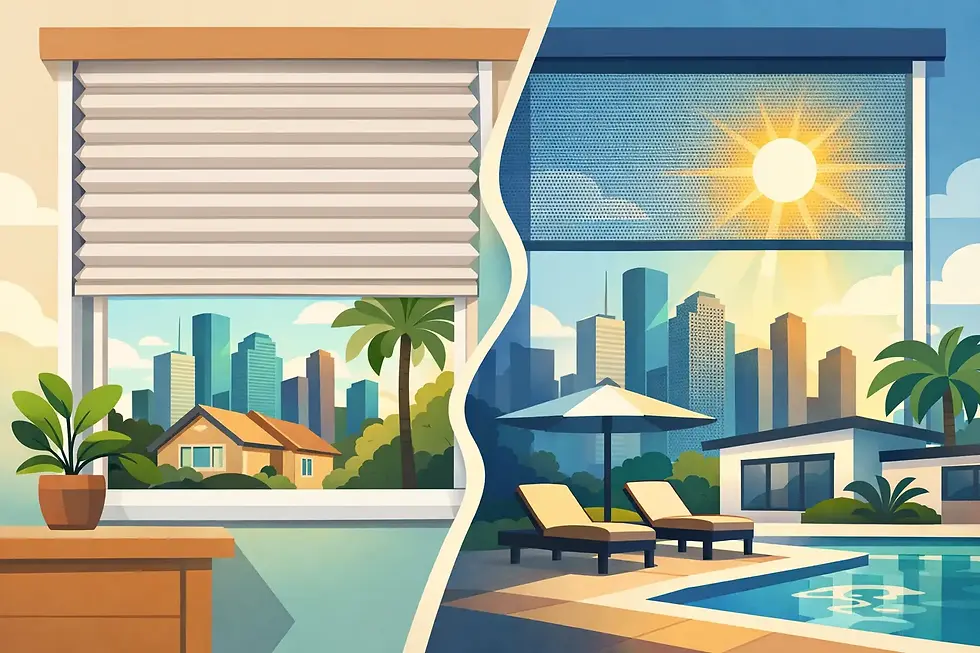
Solar shades are one of the most popular choices for bright sunrooms because they filter sunlight rather than completely blocking it. Their specialized woven fabric reduces glare and helps limit heat and UV exposure while maintaining an outward view during the day.
They come in different openness levels. A lower openness percentage has a tighter weave, providing more privacy and stronger glare control. A higher openness percentage lets in more natural light and preserves a clearer view. There is a trade-off: the more you can see out, the more light and heat can enter.
For a sunroom facing the backyard, solar shades are often an excellent fit. They keep the space connected to the outdoors while helping protect upholstered furniture, wood floors, and artwork from harsh sunlight. They are especially practical for sunrooms used as reading spaces, home offices, or casual living areas.
Keep in mind that solar shades offer the most privacy during the day. At night, when indoor lights are on and it is darker outside, silhouettes may be visible from outdoors. If nighttime privacy is a concern, pairing solar shades with drapery panels can add flexibility and a polished, layered look.
Cellular shades for insulation and comfort
Cellular shades, also called honeycomb shades, are built with air pockets that help create an insulating barrier at the window. That design makes them a smart option for homeowners focused on year-round comfort and energy efficiency.
In a sunroom that gets uncomfortably warm in summer or chilly on cooler evenings, cellular shades can help moderate the temperature. They are available in light-filtering and room-darkening fabrics, allowing you to choose how much light comes through. Light-filtering options keep the room soft and welcoming, while room-darkening fabrics provide greater coverage for media rooms or spaces that need stronger glare reduction.
The trade-off is the view. Unlike solar shades, cellular shades are designed more for insulation and light diffusion than seeing outdoors. They work best for homeowners who want a bright, comfortable room but do not need an uninterrupted view at every window.
Roller shades for a clean, modern finish
Roller shades are simple in the best way. Their streamlined profile works beautifully in contemporary sunrooms, transitional spaces, and homes where you want the window treatment to stay visually quiet. When raised, they roll neatly into place. When lowered, they offer a smooth, tailored surface with no slats to tilt or cords to manage.
Roller shades can be made in light-filtering, blackout, decorative, or solar-screen fabrics. That makes them adaptable to nearly any sunroom design. A light-filtering roller shade can soften direct sunlight while maintaining a warm glow, while a solar roller shade can address glare and heat without making the room feel dark.
For large banks of windows, matching roller shades deliver a cohesive look that does not compete with the architecture. They are also easy to operate and an excellent candidate for motorization.
Motorized shades for hard-to-reach glass
A sunroom with tall windows or transoms should not require a step stool every time the afternoon sun shifts. Motorized shades allow you to adjust light with a remote, wall control, or compatible smart-home controls, making everyday comfort far more convenient.
Motorization is not only about luxury. It is practical for large windows, doors, and elevated glass where manual operation is inconvenient. It also makes it easier to use your shades consistently. Set them to lower during the hottest part of the day, then raise them when you want to enjoy the view.
Motorized roller and solar shades are particularly popular in sunrooms because they combine clean design with effortless operation. Cordless operation also creates a cleaner appearance and is a safer choice for homes with children or pets.
How to Choose the Right Opacity and Color
Fabric color and opacity have a direct effect on the way your sunroom feels. Lighter shades reflect more sunlight and generally create an airy look. Darker solar fabrics can sometimes provide a sharper view outward, although they may absorb more heat depending on the material and placement.
Opacity determines how much light passes through. Sheer and light-filtering fabrics keep the room bright but reduce glare. Room-darkening fabrics are better when the sunroom doubles as a TV room, a guest space, or a place where privacy is essential. For most everyday sunrooms, light-filtering or solar fabrics offer the best middle ground.
A professional consultation is valuable because fabric samples can look very different in a sunroom than they do in a showroom or on a phone screen. The direction of the windows, tree coverage, exterior overhangs, and wall colors all affect the result.
Don’t Forget Doors, Skylights, and Odd-Shaped Windows
Many sunrooms include sliding doors, French doors, skylights, or unusually shaped windows. These features should be part of the plan from the beginning, not an afterthought.
For doors, shades need to clear handles and allow easy access. For skylights, manual controls may not be practical, making motorized options especially useful. Large or narrow windows may require different mounting choices to avoid light gaps and ensure smooth operation.
This is where custom measuring pays off. A treatment that is a fraction too narrow, mounted too low, or selected in the wrong fabric can leave you with the same glare and heat issues you were trying to solve. Professional measuring and installation help each shade fit the window, function reliably, and look finished from every angle.
A Better Sunroom Starts With the Right Consultation
The best shade is not always the one with the most features. It is the one that solves the problem you notice every day, whether that is blinding afternoon glare, uncomfortable heat, fading furnishings, or a lack of privacy.
A Lone Star Blinds helps homeowners compare custom solar, roller, cellular, and motorized options in the comfort of their own homes. You can see how fabrics work with your sunroom’s natural light, receive guidance based on your budget and goals, and get professional measuring and installation without guessing.
Your sunroom deserves to feel sunny, not sweltering. A free consultation is a simple way to find a shade solution that keeps the light you want and leaves the discomfort outside.


Comments