
Are Solar Screens Worth It for Texas Homes?
If your west-facing rooms feel fine at 10 a.m. and unbearable by 3 p.m., you are asking the right question: are solar screens worth it? Around Houston, Porter, and nearby communities, the answer is often yes - but not for every window and not for every homeowner. Solar screens can cut glare, reduce heat gain, and make daily life more comfortable, yet the real value depends on your sun exposure, your existing windows, and what you want the space to feel like.
For many Texas homeowners, the biggest benefit is simple. Solar screens help stop harsh sunlight before it passes through the glass. That matters because once the heat is inside, your HVAC system has to fight it. If you have rooms that heat up faster than the rest of the house, furniture fading near the windows, or blinds that stay shut all afternoon just to make the room usable, solar screens solve a very specific problem.
Are Solar Screens Worth It in Texas?
In a climate like ours, solar screens usually earn their keep faster than they do in milder parts of the country. Long cooling seasons, intense sun, and large window openings make heat control more than a nice extra. It becomes part of how comfortable your home feels and how hard your AC has to work.
That said, worth is not just about utility bills. Some homeowners choose solar screens because they want to enjoy natural light without the glare on TVs, laptops, and phones. Others care most about privacy during the day. Some simply want to protect flooring, upholstery, and wood finishes from sun damage. If your windows are creating a daily annoyance, solar screens are often one of the most practical exterior upgrades you can make.
Where people get disappointed is when they expect solar screens to do everything. They help with heat and glare, but they do not replace insulation, fix drafty windows, or darken a room the way blackout shades do. They are best seen as one layer in a smarter window strategy.
What Solar Screens Actually Do
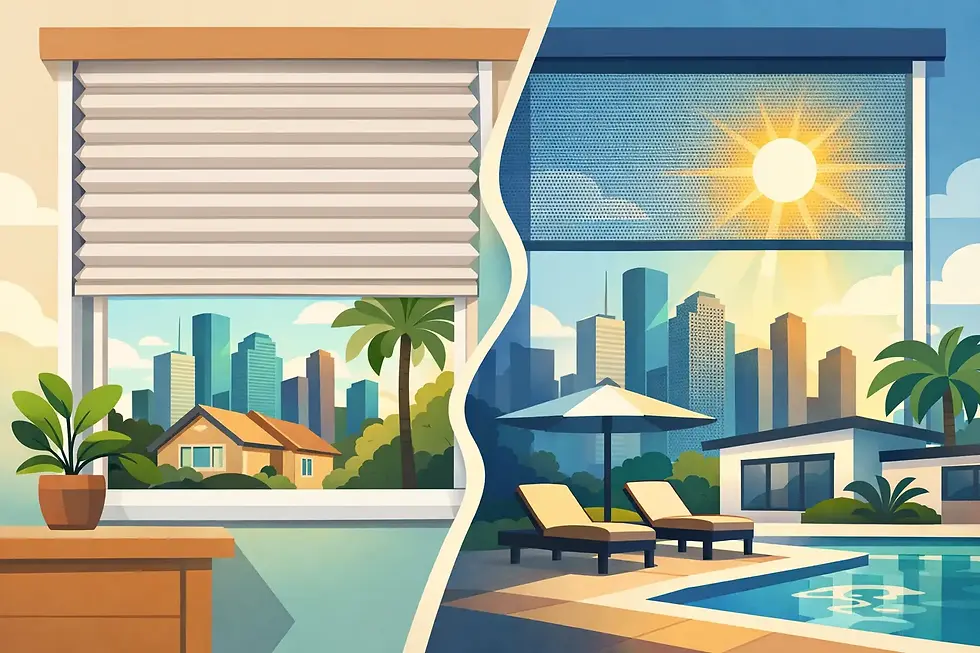
Solar screens are specially woven mesh screens installed on the exterior of your windows. Their job is to block a portion of the sun's heat and UV rays before they hit the glass. That exterior placement is what makes them different from many indoor treatments. It is easier to stop heat before it enters than to manage it after the room has already warmed up.
In practical terms, that means rooms can stay cooler and feel less bright without losing every bit of daylight. The view outward is still there, although it is softened. From the street, they can also increase daytime privacy, which many homeowners appreciate on front-facing windows.
The openness factor of the screen fabric matters. A tighter weave blocks more sun and glare, but it can also reduce visibility and make the room feel a little dimmer. A more open weave keeps more view and daylight, but it will not perform as aggressively against heat. This is where professional guidance matters, because the right choice for a tall west-facing family room may not be the right choice for a shaded bedroom.
When Solar Screens Make the Most Sense
Homes with strong east or west sun usually see the clearest payoff. Morning and especially afternoon exposure can make certain spaces uncomfortable no matter how low the thermostat is set. Large windows, picture windows, and glass-heavy living areas are prime candidates.
Solar screens also make sense when your current window coverings are doing too much defensive work. If you keep blinds closed all day to control heat, you are not really enjoying the windows you paid for. Adding solar screens can let you keep more usable light while easing the strain on your interior treatments.
They are also a strong fit for homeowners who want energy efficiency without taking on a full window replacement project. Replacing windows can be worthwhile, but it is a much larger investment. Solar screens offer a lower-cost way to improve comfort, especially when the existing windows are structurally sound.
When They May Not Be Worth It
Not every window needs a solar screen. North-facing windows, heavily shaded windows, or windows in rooms that already stay comfortable may not deliver enough benefit to justify the cost. If your main concern is nighttime privacy, solar screens are not the full answer either. They help during the day, but once interior lights are on after dark, you still need the right interior treatment.
There is also the appearance factor. Some homeowners like the clean, uniform exterior look of solar screens. Others prefer the look of clear glass, especially on decorative front windows. Neither view is wrong. This is why a tailored recommendation matters more than a one-size-fits-all sales pitch.
And if your expectation is dramatic winter energy savings, that usually is not the main story in Southeast Texas. Our region's bigger issue is cooling demand, not severe cold. Solar screens are most valuable here for warm-weather performance and comfort.
Cost vs. Value
Most homeowners do not ask, are solar screens worth it, because they are curious about screen fabric. They are asking if the improvement will feel noticeable enough to justify the spend. That is the right way to think about it.
Value comes from a mix of daily comfort, lower glare, UV protection, and potential energy savings. If a room becomes usable during the hottest part of the day, that has value. If your flooring and furnishings are less exposed to direct sun, that has value too. If your AC is not cycling as hard because the sun load is reduced, that can show up over time.
The exact return depends on the home. A two-story house with broad west-facing windows may feel a much bigger difference than a shaded one-story home with mature trees. Installation quality matters as well. A custom fit looks better, performs better, and avoids the frustrations that come with loose or poorly sized products.
Solar Screens vs. Interior Shades and Blinds
This is where many homeowners get stuck, because they assume they need to choose one or the other. In reality, exterior solar screens and interior window treatments often work best together.
Solar screens handle a large share of the sun before it reaches the glass. Interior roller shades, blinds, shutters, or curtains then fine-tune privacy, light control, and style inside the room. If your goal is a polished home that feels cooler and looks finished, layering is usually the smarter move.
For example, a solar screen may reduce the afternoon blast in a living room, while a light-filtering shade gives you softness and privacy indoors. In a bedroom, you might pair solar screens with a room-darkening treatment for better sleep and stronger temperature control. Performance and design do not have to compete.
Choosing the Right Solar Screens
The best solar screens are the ones selected for your home, not just sold off a shelf. Fabric openness, frame color, window orientation, and surrounding landscape all affect the result. A darker screen can improve outward visibility, while the percentage of sun blockage changes how much heat and glare are reduced.
This is also where measurements and installation matter. An imperfect fit can leave gaps, affect curb appeal, and limit performance. Homeowners usually get the best results when the product is matched to the home's actual conditions instead of chosen by guesswork.
A full-service local company can make that process much easier. A Lone Star Blinds helps homeowners compare options, measure correctly, and choose window solutions that fit both the room and the budget. That kind of guidance matters when you want the premium look without paying for trial and error.
So, Are Solar Screens Worth It?
If your home gets hammered by sun, your rooms overheat, or your current coverings are always closed just to keep things tolerable, solar screens are often a smart investment. They can improve comfort quickly, protect interiors, and make your windows easier to live with every day. If your windows are shaded, lightly used, or mainly a nighttime privacy issue, the payoff may be smaller.
The right answer usually comes from looking at your home window by window, not from making a blanket decision for the whole house. The best upgrades are the ones that solve the problems you actually feel. If the sun is winning in your home, this is one of the most effective ways to push back - and finally enjoy the light on your terms.


Comments